Blog
How Valve Manufacturers Are Tackling Water Hammer in Modern Pipelines
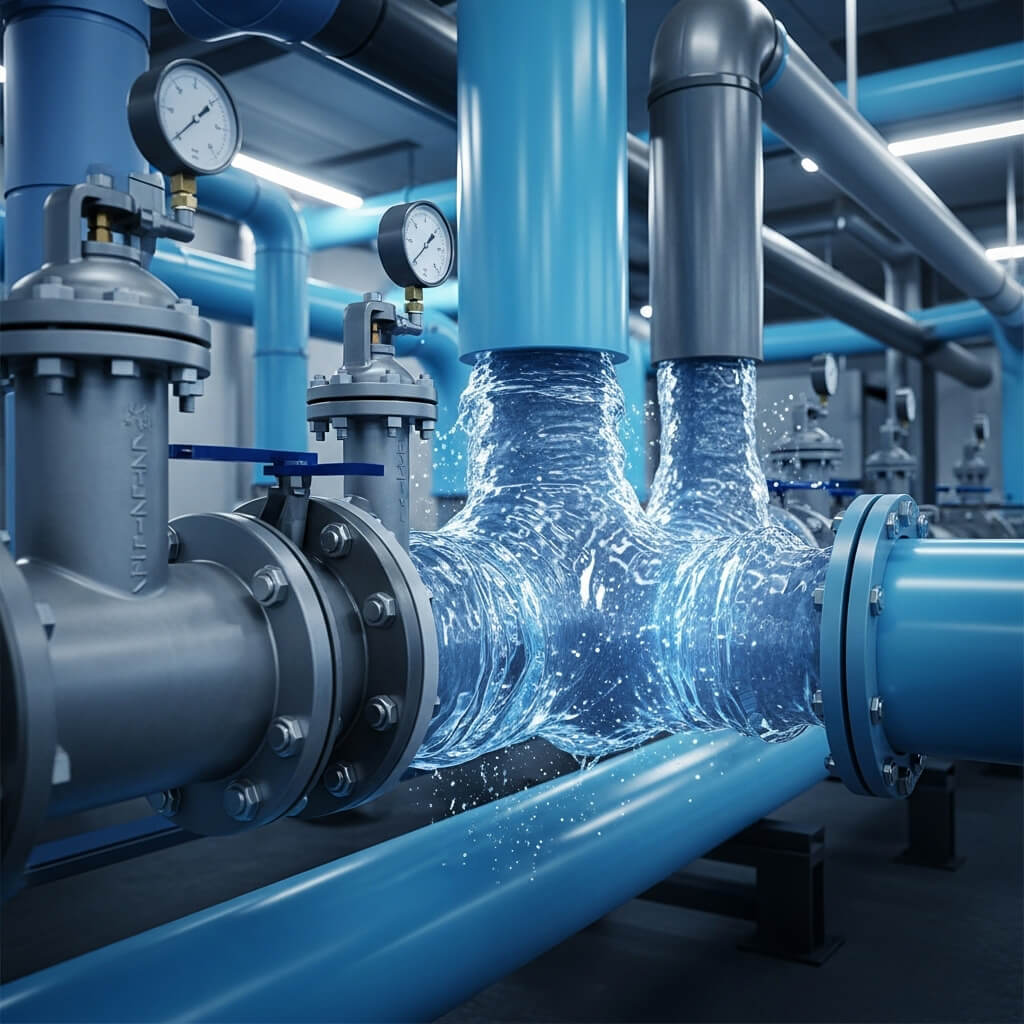
Water hammer (also called hydraulic shock) is a major risk for fluid‐transport systems—from municipal water supply mains to high‐pressure industrial pipelines. Valve manufacturers are adapting design, control and system‐integration strategies to help mitigate these risks. Below is a detailed overview of what water hammer is, why it matters, and how modern valve makers are responding.
Understanding Water Hammer
Water hammer occurs when moving fluid is forced to stop or change direction suddenly, such as when a valve closes too quickly or a pump shuts down. Because liquids are nearly incompressible, this abrupt deceleration creates a high-pressure shock wave that travels through the pipeline.
The consequences include loud banging noises, pipe vibration, seal failures, and even catastrophic bursts. Preventing these surges is now a central goal for valve designers and engineers worldwide.
1. Smarter Valve Designs for Controlled Closure
Traditional swing check valves can close too suddenly, causing fluid to slam into the valve disc. In response, manufacturers are developing slow-closing or spring-assisted check valves that allow smoother flow reversal.
By decelerating fluid gradually rather than stopping it abruptly, these valves dramatically reduce surge pressures. Many new models also feature adjustable closure rates to fine-tune performance for specific applications.
2. Air Management and Relief Systems
Trapped air in pipelines can intensify water hammer. To solve this, many modern valve systems now integrate air release and vacuum relief valves. These components automatically vent trapped air and admit air when negative pressure occurs, maintaining stable flow and protecting against vacuum collapse.
Some manufacturers are introducing triple-function air valves that release, admit, and control air flow — offering all-in-one protection against surges and vacuum conditions.
3. Stronger, More Resilient Valve Materials
The pressure spikes from water hammer can far exceed a system’s normal operating limits. Valve makers are responding by using forged construction, reinforced seals, and optimized internal geometries that minimize turbulence and withstand extreme loads.
Durable materials such as stainless steel, ductile iron, and advanced composites ensure that valves maintain integrity even during severe pressure transients.
4. Intelligent Actuation and Control
Beyond mechanical improvements, leading manufacturers are embracing smart valve technology. These systems use sensors and actuators that monitor pressure and flow conditions, adjusting valve operation in real time.
For example, automated control valves can modulate closure speed based on pressure data, while connected systems integrate with SCADA or IoT networks to detect and correct surge events before damage occurs.
5. Engineering Support and System-Wide Integration
No valve can eliminate water hammer on its own — system design plays an essential role. Recognizing this, manufacturers now provide engineering support, simulation tools, and surge analysis services to help operators design safer systems.
Proper valve placement, pipeline layout, and pump-shutdown sequencing all contribute to effective water hammer prevention. Manufacturers are positioning themselves not just as product suppliers but as engineering partners in pipeline protection.
Emerging Trends
Retrofitting older systems: Compact, modular surge-relief valves make it easier to upgrade legacy infrastructure.
Data-driven maintenance: Smart valves provide continuous pressure monitoring to predict and prevent failures.
Integrated valve solutions: Multi-function designs combine check, surge-relief, and air-release capabilities in one unit.
Key Takeaways
Use slow-closing or spring-assisted valves to control closure rates.
Install air release and vacuum relief valves to manage trapped air.
Choose robust materials and precision-engineered flow paths to handle surges.
Incorporate intelligent controls for real-time monitoring and actuation.
Collaborate with manufacturers early in design to ensure system-wide surge protection.


